
2027 Toyota Highlander Introduction – The 2027 Toyota Highlander is already generating excitement among SUV enthusiasts, industry analysts, and loyal Toyota customers long before its official debut. As one of the most successful three-row midsize SUVs on the market, the Highlander has built its reputation by delivering an exceptional balance of reliability, comfort, efficiency, and long-term value. Over the years, it has become the preferred choice for growing families seeking dependable transportation without sacrificing modern technology or premium comfort.
With the automotive industry rapidly moving toward electrification, smarter driver-assistance systems, and more sophisticated cabin technology, expectations for the upcoming 2027 Toyota Highlander are naturally high. While Toyota has not officially revealed the vehicle at the time of writing, numerous industry trends and Toyota’s recent product strategy provide valuable insight into what buyers may reasonably expect from the next generation.
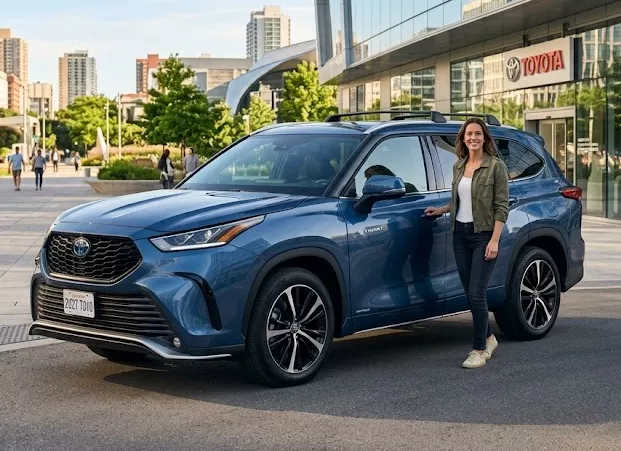
Rather than simply refreshing the exterior styling, many observers anticipate that Toyota will use the 2027 model year to modernize the Highlander further while preserving the qualities that have made it one of America’s best-selling family SUVs. Improved efficiency, updated hybrid technology, enhanced connectivity, and a more upscale cabin are all widely expected to play significant roles.
If these expectations prove accurate, the 2027 Toyota Highlander could strengthen its position against increasingly competitive rivals while continuing to attract families looking for dependable, practical, and technologically advanced transportation.
2027 Toyota Highlander Redesign
Although Toyota has yet to confirm the design direction of the 2027 Toyota Highlander, industry expectations suggest that the SUV may receive one of its most comprehensive updates in recent years. Rather than introducing radical styling, Toyota is likely to continue refining the Highlander’s mature appearance with cleaner body lines, sharper proportions, and a more premium overall presence.
The next-generation Highlander is expected to remain built upon Toyota’s TNGA architecture or a significantly updated version of the platform. This flexible platform has already proven capable of delivering improved structural rigidity, better crash protection, lower noise levels, and more responsive handling across several Toyota models.
Many automotive experts expect Toyota to emphasize aerodynamic improvements as fuel efficiency standards become increasingly demanding. A redesigned front fascia with active grille shutters, reshaped air curtains, and smoother underbody panels could reduce drag while giving the SUV a more sophisticated appearance.
Lighting technology is also likely to evolve considerably. Slimmer LED headlights, full-width rear lighting elements, animated turn signals, and distinctive daytime running lights could help establish a stronger visual identity while improving nighttime visibility.
The redesign may also focus on practicality. Slight increases in overall length or wheelbase could provide additional third-row legroom and greater cargo capacity without dramatically increasing the Highlander’s footprint. Toyota has consistently demonstrated an ability to maximize interior space efficiently, making this a logical direction for the upcoming model.
Another likely area of improvement involves digital technology integration. Future Toyota vehicles increasingly emphasize software-defined features, over-the-air updates, cloud-based navigation, and customizable digital interfaces. The 2027 Highlander is expected to continue this transition, allowing owners to enjoy new features throughout the vehicle’s lifespan rather than relying solely on dealership updates.
Overall, the redesign is expected to represent an evolution rather than a revolution, maintaining the Highlander’s family-friendly character while incorporating more advanced engineering and contemporary styling.
2027 Toyota Highlander Exterior and Interior
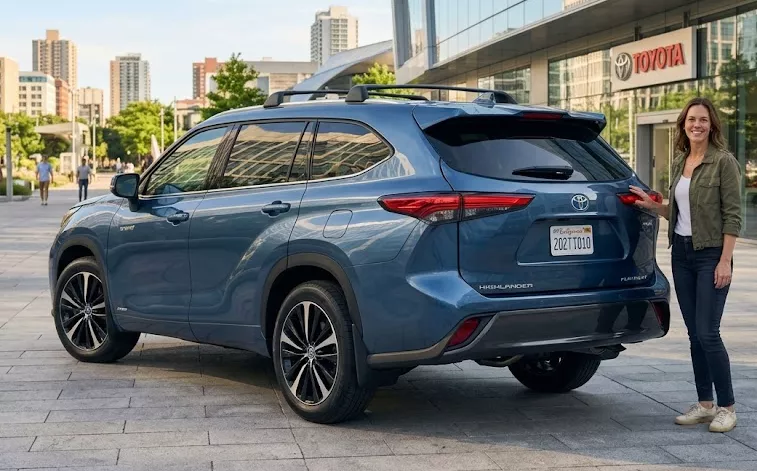
The exterior of the anticipated 2027 Toyota Highlander is expected to project greater sophistication while maintaining the SUV’s recognizable proportions. Designers will likely focus on cleaner surfacing, sculpted fenders, and a more athletic stance that appeals to both families and younger buyers seeking a refined daily driver.
The front end could adopt Toyota’s latest design language, featuring a larger yet more integrated grille, slimmer LED headlamps, and more sculpted bumper treatments. Depending on trim level, unique grille patterns, contrasting roof colors, larger alloy wheels, and black exterior accents may help distinguish sport-oriented variants from luxury-focused models.
Around the sides, flush-style door handles, aerodynamic mirrors, and improved wheel designs may contribute to better efficiency while enhancing the Highlander’s premium appearance. At the rear, connected LED taillights and a redesigned tailgate could modernize the SUV’s overall profile without departing dramatically from Toyota’s conservative styling philosophy.
Inside, expectations are even higher. Toyota has steadily improved interior quality across its lineup, and the 2027 Highlander is widely expected to continue that upward trend. Higher-grade soft-touch materials, improved stitching, larger digital displays, and enhanced ambient lighting could create a cabin that feels considerably more upscale than previous generations.
A large central infotainment display, potentially measuring around 14 inches on upper trims, is expected to dominate the dashboard. Wireless Apple CarPlay, Android Auto compatibility, cloud-connected navigation, wireless charging, multiple USB-C ports, and expanded voice-command functionality are all likely to be available.
Digital instrumentation should also receive substantial upgrades. Drivers may benefit from a fully configurable digital gauge cluster that displays navigation, hybrid energy information, safety alerts, and customizable vehicle data in a clean, intuitive format.
Passenger comfort has always been a strength of the Highlander, and the upcoming model is expected to build on this foundation. Wider front seats with enhanced lumbar support, ventilated seating, heated second-row captain’s chairs on premium trims, and improved third-row accessibility could make long journeys more comfortable for every occupant.

Cargo flexibility will likely remain one of the Highlander’s biggest selling points. Fold-flat seating configurations, additional under-floor storage, and a hands-free power liftgate are expected to continue providing the versatility families appreciate during road trips, grocery runs, and outdoor adventures.
Toyota Safety Sense is also expected to receive further enhancements. While official details remain unavailable, the next-generation safety suite may include improved adaptive cruise control, lane-centering assistance, enhanced pedestrian detection, intersection collision avoidance, traffic sign recognition, driver monitoring technology, and more advanced parking assistance.
Noise reduction is another area where improvements are anticipated. Additional sound insulation, laminated acoustic glass, and refined suspension tuning could significantly reduce road and wind noise, resulting in a quieter, more luxurious driving experience.
2027 Toyota Highlander Engine and Performance
Powertrain development will likely represent one of the most significant aspects of the 2027 Toyota Highlander. As emissions regulations continue evolving globally, Toyota is expected to place even greater emphasis on electrification without compromising reliability or everyday usability.
Although Toyota has not announced official engine options, many industry observers expect hybrid powertrains to become the primary focus. A revised version of Toyota’s hybrid system could deliver stronger acceleration while simultaneously improving fuel economy compared to current models.
One possible configuration could combine a turbocharged four-cylinder gasoline engine with updated electric motors and a more energy-dense battery pack. If this approach is adopted, the combined system output could range from approximately 270 to 350 horsepower, depending on the drivetrain configuration. These figures remain speculative until Toyota releases official information.
Fuel economy is another area where improvements are widely anticipated. Depending on the final engineering specifications, hybrid models may achieve fuel economy exceeding 35 miles per gallon in combined driving, while plug-in hybrid technology remains a possibility should Toyota choose to expand its electrified SUV portfolio further.
Transmission refinement is also expected. Toyota has consistently improved the responsiveness and smoothness of its electronically controlled continuously variable transmissions in hybrid applications, and the next Highlander could benefit from quicker throttle response and more natural acceleration characteristics.
All-wheel drive will likely remain available across much of the lineup. Toyota’s electronically controlled all-wheel-drive systems have proven effective in a range of weather conditions, distributing torque intelligently while maintaining excellent fuel efficiency.
Ride quality is expected to receive further refinement through suspension updates and improved chassis tuning. Drivers can reasonably expect a smoother ride over rough pavement while maintaining confident cornering and predictable highway stability.
Steering precision may also improve thanks to recalibrated electric power steering systems. Combined with enhanced structural rigidity, these updates could make the Highlander feel more composed and responsive without sacrificing its comfortable family-oriented personality.
Towing capability is another area of interest. While Toyota has not confirmed the specifications, many analysts expect the towing capacity to remain competitive in the midsize SUV segment, potentially reaching approximately 5,000 pounds, depending on engine choice and equipment.
Software integration may further enhance driving dynamics through selectable drive modes that optimize throttle response, steering weight, hybrid energy usage, and traction management. Eco, Normal, Sport, Snow, and Trail settings could allow drivers to tailor vehicle behavior according to changing road conditions.
Taken together, these anticipated improvements suggest the 2027 Toyota Highlander will continue prioritizing efficiency and comfort while offering stronger performance than previous generations.
2027 Toyota Highlander Price and Release Date
Toyota has not officially announced pricing or a release schedule for the 2027 Toyota Highlander. Consequently, any current estimates should be viewed as informed expectations rather than confirmed information.
Based on current market trends, inflation, increased technology content, and Toyota’s broader product positioning, the entry-level 2027 Highlander could potentially begin at approximately $43,000 to $46,000 before destination charges. Mid-level trims equipped with additional technology, premium materials, and enhanced convenience features may fall within the $48,000 to $54,000 range.
Fully equipped hybrid or premium editions could reasonably approach $58,000 to $65,000, especially if Toyota introduces more advanced electrified powertrains or luxury-oriented features. These estimates remain speculative until official pricing is announced.
Regarding availability, many industry observers expect Toyota to reveal the new Highlander sometime in 2026 before launching it as a 2027 model. Depending on production schedules and regional availability, customer deliveries could begin in late 2026 or early 2027. However, Toyota has not confirmed any official timeline.
As production approaches, additional information regarding trim levels, powertrains, equipment packages, and pricing should become available through official Toyota announcements.
2027 Toyota Highlander Personal Note
The Toyota Highlander has consistently earned its reputation with drivers. Instead of chasing short-lived trends, Toyota has traditionally prioritized reliability, comfort, efficiency, resale value, and user-friendly technology. That balanced philosophy is one of the primary reasons the Highlander continues to enjoy strong customer loyalty year after year.
If Toyota successfully combines its proven dependability with more advanced hybrid technology, a significantly upgraded interior, refined styling, and next-generation digital features, the 2027 Toyota Highlander could become one of the most compelling family SUVs on the market. Buyers increasingly expect vehicles that are not only practical but also enjoyable to drive and equipped with intuitive technology that simplifies daily life.
Until Toyota officially unveils the vehicle, many details remain speculative. Nevertheless, current industry expectations suggest the upcoming Highlander will continue to evolve in thoughtful ways rather than undergo dramatic changes that risk alienating loyal customers. For families seeking a midsize SUV that balances efficiency, versatility, safety, and long-term ownership satisfaction, the 2027 Toyota Highlander is certainly one of the most anticipated vehicles to watch.
Also read the article : https://cagecars.com/2027-tesla-cybertruck-shocking-details-revealed/