
2027 Toyota bZ Range Introduction – Toyota has spent decades establishing itself as one of the world’s most respected automotive manufacturers through innovation, reliability, and groundbreaking hybrid technology. As the global industry transitions toward full electrification, Toyota is expanding its battery-electric portfolio under the bZ, or “beyond Zero,” family of vehicles. Increasingly, consumers are searching for information about the 2027 Toyota bZ Range, hoping to learn how far Toyota’s future electric models may travel on a single charge and what advancements the company could introduce by 2027.
It is important to clarify that Toyota has not officially announced a production model called the “2027 Toyota bZ Range.” The phrase “bZ Range” is generally understood to refer to Toyota’s expanding family of battery-electric vehicles and the driving range they are expected to deliver, rather than to a specific vehicle name. Consequently, the discussion in this article is based on Toyota’s publicly announced electrification strategy, current battery-electric models, concept vehicles, and industry expectations. Any specifications, pricing, release timing, or performance figures mentioned below should therefore be considered estimates rather than confirmed facts.
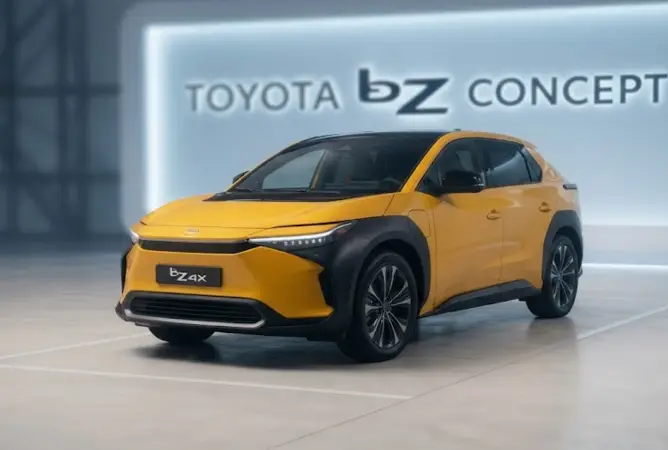
The electric vehicle market has evolved at an extraordinary pace over the past several years. Consumers no longer evaluate electric vehicles solely by their environmental benefits. Today, long driving range, rapid charging capability, intelligent software, premium comfort, and a dependable ownership experience have become equally important factors in the purchase decision.
2027 Toyota bZ Range enters this competitive environment with decades of expertise in electrification. The company pioneered mass-market hybrid vehicles and has continuously refined battery management, electric motor efficiency, and energy recovery technologies over multiple generations of vehicles. That experience provides a strong technical foundation as Toyota accelerates development of fully electric automobiles.
The bZ family represents Toyota’s long-term commitment to battery-electric mobility. Rather than replacing its successful hybrid lineup entirely, Toyota has adopted a multi-pathway strategy that includes hybrids, plug-in hybrids, hydrogen fuel-cell vehicles, and battery-electric models. This balanced approach allows the company to address varying customer needs across global markets while continuing to invest heavily in future battery technologies.
By 2027, industry observers expect Toyota’s bZ lineup to expand significantly, potentially covering compact crossovers, midsize SUVs, sedans, and larger family-oriented vehicles. Each model would likely emphasize Toyota’s traditional strengths of durability, efficiency, and long-term reliability while incorporating increasingly sophisticated battery-electric technology.
2027 Toyota bZ Range Redesign
Although no vehicle officially named the 2027 Toyota bZ Range has been confirmed, analysts expect Toyota’s future bZ models to share a refined design philosophy centered on aerodynamic efficiency, clean styling, and practical functionality.
Future bZ vehicles are likely to feature smoother body surfaces than many current SUVs, reducing drag while maximizing driving range. Designers may continue minimizing unnecessary visual complexity, instead emphasizing crisp body lines, sculpted proportions, and elegant lighting signatures that create a modern yet timeless appearance.
The front fascia is expected to evolve toward an increasingly minimalist design. Traditional grilles become largely unnecessary in battery-electric vehicles, allowing Toyota to replace them with sculpted surfaces that improve airflow while reinforcing the identity of the bZ family.
Slim LED headlights, illuminated branding elements, and adaptive lighting technologies could become defining characteristics throughout the lineup. Improved aerodynamic bumper designs and carefully integrated air curtains may further optimize efficiency without sacrificing visual appeal.
Viewed from the side, flush door handles, redesigned mirror housings, optimized wheel designs, and carefully sculpted lower body panels could contribute to meaningful improvements in aerodynamic performance. Every detail in a modern electric vehicle influences efficiency, making thoughtful design essential to maximizing driving range.
The rear section may feature full-width LED lighting signatures, subtle integrated spoilers, and carefully managed airflow around the tailgate. Toyota has steadily embraced cleaner, more premium design language across its recent vehicles, and future bZ products are expected to continue that progression.
Structural improvements are also anticipated. Toyota continues to invest in next-generation dedicated EV platforms that improve rigidity, optimize battery placement, reduce overall weight, enhance occupant safety, and create more spacious interiors.
2027 Toyota bZ Range Exterior and Interior
One of the greatest advantages of dedicated electric platforms is their ability to maximize interior space, and Toyota is expected to exploit this benefit across its future bZ lineup fully.
Exterior styling will likely remain contemporary while avoiding excessive futurism. Toyota has traditionally favored designs that age gracefully, and future bZ vehicles are expected to balance innovation with long-term visual appeal.
Premium exterior finishes, larger aerodynamic alloy wheels, panoramic glass roofs, contrasting roof colors, and sophisticated lighting technology could become increasingly common across higher trim levels.
Inside, Toyota is expected to continue embracing minimalist architecture focused on comfort, technology, and sustainability. The absence of a conventional transmission tunnel allows engineers greater flexibility when designing spacious cabins with flat floors and improved passenger accommodation.

The dashboard will likely center on Toyota’s newest multimedia system, displayed on a large, high-resolution touchscreen, featuring improved processing speed, cloud-based navigation, and seamless over-the-air software updates.
Digital instrumentation is expected to become increasingly customizable, allowing drivers to prioritize navigation, battery information, charging status, efficiency monitoring, safety alerts, and entertainment controls according to individual preferences.
Material quality should continue improving through greater use of recycled fabrics, environmentally friendly synthetic leather, renewable trim materials, and sustainable manufacturing practices. Toyota has repeatedly emphasized reducing environmental impact throughout the entire vehicle lifecycle rather than focusing exclusively on zero-emission driving.
Passenger comfort is also expected to advance significantly. Redesigned seating with enhanced ergonomic support, improved climate management systems, additional sound insulation, and advanced acoustic glass could create an exceptionally quiet cabin suitable for both urban commuting and long-distance touring.
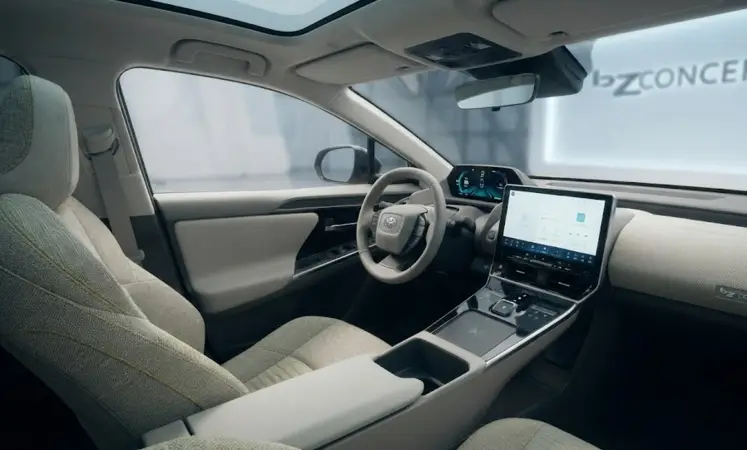
Practicality remains central to Toyota’s philosophy. Clever storage compartments, generous luggage capacity, wireless charging, multiple USB-C ports, and flexible seating configurations would ensure future bZ vehicles meet the diverse needs of families, professionals, and everyday commuters.
Toyota Safety Sense will almost certainly continue evolving alongside the company’s digital technologies. Although official equipment details remain unconfirmed, future bZ models are widely expected to include adaptive cruise control, lane-centering assistance, automatic emergency braking, blind-spot monitoring, rear cross-traffic alert, intelligent parking systems, and increasingly sophisticated driver-monitoring features.
2027 Toyota bZ Range Engine and Performance
Battery-electric technology will naturally define every future member of Toyota’s bZ family, but Toyota has not officially confirmed technical specifications for its 2027 lineup.
Industry analysts expect significant improvements in battery energy density compared with today’s models. Advances in lithium-ion chemistry, thermal management, and battery packaging could allow future Toyota EVs to travel considerably farther while maintaining the company’s reputation for long-term durability.
Driving range remains one of the most discussed aspects of future Toyota electric vehicles. Although Toyota has released no official figures, many analysts anticipate that higher-capacity versions in the 2027 bZ lineup could achieve driving ranges of 350-450 miles on a full charge under favorable testing conditions. These estimates remain speculative and should not be interpreted as confirmed specifications.
Toyota continues researching next-generation battery technologies, including solid-state batteries. While the company has publicly discussed progress in this field, it has not confirmed that production 2027 bZ vehicles will use solid-state battery systems. Therefore, any expectation regarding their introduction remains speculative.
Charging capability is also expected to improve substantially. Faster DC charging, more intelligent battery preconditioning, improved thermal regulation, and optimized charging software could significantly reduce charging times while preserving long-term battery health.
Toyota is likely to continue offering both front-wheel-drive and dual-motor all-wheel-drive configurations depending on vehicle size and trim level. All-wheel-drive variants may benefit from further collaboration with Subaru, whose expertise in traction management has already influenced certain developments in electric vehicles.
Ride quality should remain one of Toyota’s priorities. Dedicated EV platforms naturally lower the vehicle’s center of gravity, improving stability while enhancing passenger comfort. Revised suspension tuning, lighter components, and more sophisticated chassis calibration could further refine the driving experience.
Regenerative braking systems may become increasingly customizable, allowing drivers to select different levels of energy recovery based on driving conditions and personal preference. Intelligent software could also optimize energy management automatically using navigation data, traffic information, elevation changes, and driver behavior.
Rather than emphasizing maximum acceleration alone, Toyota is expected to continue focusing on balanced performance, predictable handling, exceptional efficiency, and long-term dependability the characteristics that have consistently defined the company’s engineering philosophy.
2027 Toyota bZ Range Price and Release Date
Since Toyota has not officially announced a vehicle called the 2027 Toyota bZ Range, all pricing and release information should be viewed as informed industry speculation rather than confirmed fact.
As Toyota expands its battery-electric portfolio, analysts expect pricing to vary considerably depending on vehicle size, battery capacity, drivetrain configuration, and equipment level. Compact crossover models could reasonably begin around $40,000, while larger premium SUVs featuring dual-motor all-wheel drive, larger battery packs, and luxury appointments may approach or exceed $70,000. These estimates reflect current market trends and are not official Toyota pricing.
Regarding availability, many observers anticipate that Toyota will continue to introduce new members of the bZ family throughout 2026 and 2027 as part of its broader electrification strategy. However, Toyota has not confirmed production schedules, reveal dates, or launch timing for any vehicle specifically identified as the “2027 Toyota bZ Range.”
Prospective buyers should therefore regard all specifications, pricing estimates, and release expectations discussed here as preliminary until Toyota publishes official product information.
2027 Toyota bZ Range Personal Note
Toyota’s transition into the battery-electric era represents one of the most significant developments in the company’s modern history. Rather than abandoning its established engineering principles, Toyota appears committed to applying decades of experience in quality control, efficiency, and long-term durability to an entirely new generation of electric vehicles.
That measured approach may ultimately prove to be one of Toyota’s greatest strengths. While many manufacturers compete primarily through headline acceleration figures or increasingly complex technology, Toyota continues to emphasize the qualities that matter over the long term: reliability, usability, efficiency, and customer confidence.
If the company’s future bZ lineup delivers the improvements many analysts anticipate including substantially longer driving range, faster charging, smarter digital integration, enhanced interior refinement, and more advanced battery technology it could become one of the most compelling electric-vehicle families in the mainstream market.
Although a vehicle officially named the 2027 Toyota bZ Range has not been confirmed, the broader direction of Toyota’s electrification strategy is becoming increasingly clear. The company appears determined to build electric vehicles that are not only technologically advanced but also dependable enough to earn the same trust that has defined Toyota products for generations. For drivers preparing to transition to electric mobility, Toyota’s expanding bZ family could represent one of the industry’s most balanced combinations of innovation, practicality, and long-term ownership value.
Also read the article : https://cagecars.com/2027-toyota-bz4x-incredible-expectations-for/