
The 2027 Ford Aerostar is expected to mark the return of one of Ford’s most recognizable family vehicle names. Originally introduced in the 1980s, the Aerostar became known for its practical interior, family-friendly versatility, and dependable performance. Although the original model disappeared from the market years ago, growing demand for spacious family vehicles and modern multi-purpose vans has sparked speculation about a possible Aerostar revival. If Ford decides to reintroduce the Aerostar for the 2027 model year, the vehicle would likely be dramatically different from the boxy minivan that many people remember. Today’s automotive market demands advanced technology, premium comfort, fuel efficiency, and stylish design even in family-oriented vehicles. As a result, the modern Aerostar could combine the practicality of a minivan with the styling and technology of a modern crossover SUV.

Industry speculation suggests that Ford may position the new Aerostar as a highly versatile people mover designed for large families, business transportation, road trips, and lifestyle-focused buyers. The vehicle could compete against models such as the Toyota Sienna, Honda Odyssey, Kia Carnival, and Chrysler Pacifica while offering Ford’s own approach to modern family transportation. The 2027 Aerostar is expected to feature a bold redesign, advanced hybrid or electrified powertrain options, a spacious, high-tech interior, and numerous driver-assistance systems. Ford may also emphasize comfort, connectivity, and efficiency to attract buyers looking for an alternative to large SUVs. Whether used as a daily family vehicle, long-distance travel van, or premium shuttle vehicle, the 2027 Ford Aerostar could become one of Ford’s most interesting modern revivals.
2027 Ford Aerostar Overview and Review
The 2027 Ford Aerostar is expected to combine practicality, comfort, and modern technology into one highly versatile package. Unlike traditional minivans, the new Aerostar is likely to adopt a more SUV-inspired appearance while maintaining the spaciousness and flexibility families need. One of the Aerostar’s biggest advantages would likely be interior space. Modern buyers increasingly want vehicles that can comfortably transport large families, luggage, sports equipment, and travel gear without sacrificing comfort. The Aerostar could answer these needs with a three-row seating layout, flexible cargo space, and advanced storage solutions.
Ford is also expected to focus heavily on ride quality and cabin refinement. Family-oriented buyers value quiet interiors and smooth driving dynamics, especially during long-distance trips. Engineers may revise suspension tuning and noise insulation to create a more comfortable and relaxing driving experience. Technology is expected to become one of Aerostar’s strongest selling points. Large digital displays, wireless smartphone integration, cloud-connected services, and advanced safety technologies are likely to become central features of the vehicle. The Aerostar may also target buyers who currently prefer SUVs over traditional minivans. By combining rugged styling cues, premium interior materials, and advanced all-wheel-drive systems, Ford could make the Aerostar more appealing to younger families and adventure-focused buyers. Practicality would remain a major focus. Sliding rear doors, fold-flat seating systems, configurable cargo layouts, and numerous charging ports are expected to make the Aerostar highly functional for both daily use and travel. Overall, the 2027 Aerostar could represent Ford’s attempt to reinvent the modern family van by blending minivan practicality with crossover-inspired design and technology.
2027 Ford Aerostar Redesign
The redesign of the 2027 Ford Aerostar is expected to modernize the classic nameplate completely. Rather than reviving the original boxy design, Ford would likely create a sleek, futuristic family vehicle that aligns with modern automotive trends.
Exterior Design
The exterior of the 2027 Ford Aerostar is expected to feature a more aerodynamic, upscale appearance than that of traditional minivans. Ford may combine crossover SUV styling elements with the practicality of a people mover to create a unique design identity. The front fascia could feature a large grille, slim LED headlights, and a full-width lighting signature similar to that of Ford’s newer electric and hybrid vehicles. This design would give the Aerostar a more premium and futuristic appearance. The hood may become more sculpted and aerodynamic to improve efficiency and reduce wind resistance. Smooth body lines and integrated airflow elements could also contribute to better fuel economy and quieter highway driving. Ford is expected to focus heavily on aerodynamics for the Aerostar. Unlike older minivans with flat sides and boxy proportions, the new model may feature curved surfaces, flush door handles, and a sloping roofline, giving it a more modern appearance.

Sliding rear doors are expected to remain a major feature for easier passenger access in tight parking spaces. Power-operated sliding doors and hands-free opening systems may become available on higher trims. The Aerostar’s side profile could include large windows and a long wheelbase to maximize interior space while improving outward visibility. Wheel sizes may range from 18 to 21 inches, depending on trim level. At the rear, the Aerostar may feature a wide LED light bar, sculpted tailgate design, and lower bumper accents inspired by SUVs rather than traditional vans. Ford may also offer contrasting roof colors and appearance packages aimed at younger buyers. Roof rails, integrated cargo solutions, and optional panoramic glass roofs could further enhance the vehicle’s practicality and upscale image.
Interior Design
Inside the cabin, the 2027 Ford Aerostar is expected to become one of the most technologically advanced family vehicles Ford has ever produced. The dashboard could feature a minimalist layout centered around a massive digital infotainment display and a fully digital instrument cluster. Ford may also integrate advanced voice controls and AI-powered connectivity systems. Wireless Apple CarPlay, Android Auto, cloud-connected navigation, over-the-air updates, and wireless charging are expected to become standard or widely available. The Aerostar will likely seat seven or eight passengers, depending on the configuration. Premium trims may feature captain’s chairs in the second row with reclining, heating, ventilation, and massage functions.
Ford is expected to use higher-quality materials throughout the cabin. Soft-touch surfaces, leather upholstery, ambient lighting, wood accents, and premium sound systems may create a more luxurious interior environment. Practicality is expected to remain a major priority. Fold-flat third-row seating, removable storage compartments, and configurable cargo systems could make the Aerostar extremely versatile for families and travel.
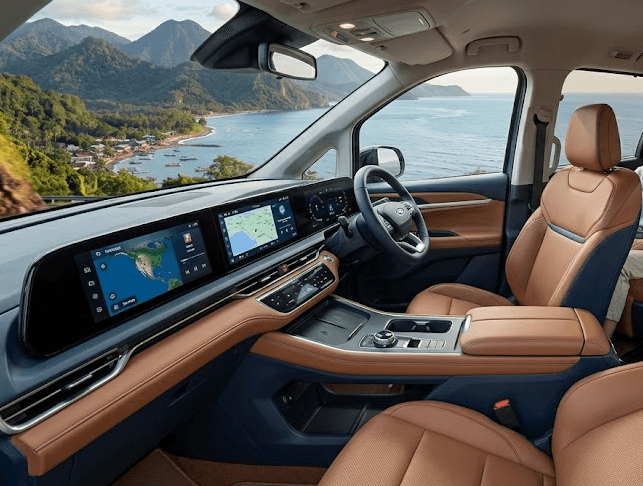
The cabin may also include numerous USB-C ports, household-style power outlets, fold-out tables, and rear-seat entertainment systems to improve long-distance comfort. Noise insulation is expected to improve significantly compared to older family vans. Acoustic glass, upgraded sound-deadening materials, and active noise cancellation technology may create a much quieter cabin. Safety and driver-assistance systems are likely to become central selling points. Features such as adaptive cruise control, lane-centering assist, blind-spot monitoring, rear cross-traffic alert, automatic emergency braking, and Ford BlueCruise hands-free driving technology could all become available.
Engine and Performance
The 2027 Ford Aerostar is expected to prioritize efficiency, smooth performance, and family-friendly driving dynamics rather than extreme speed or towing capability. One of the most likely powertrain options is a hybrid system combining a turbocharged gasoline engine with an electric motor. Ford has already expanded hybrid technology across multiple vehicle segments, and the Aerostar could benefit significantly from electrification. A hybrid Aerostar may use a turbocharged 2.5-liter four-cylinder engine paired with electric motors to deliver a balance of fuel efficiency and responsive acceleration. Combined power output could range from 250 to 320 horsepower, depending on trim level.
Hybrid technology would provide several advantages for a family-focused vehicle. Electric motor assistance could improve low-speed acceleration, reduce fuel consumption, and enhance smoother city driving. Ford may also introduce a plug-in hybrid version capable of driving limited distances on electric power alone. This setup would appeal to families looking to reduce fuel costs and emissions while maintaining long-distance travel capability.

An all-electric Aerostar variant is also possible as Ford continues expanding its electric vehicle lineup. A fully electric model could provide instant torque, quiet operation, and advanced battery technology designed for long-range travel. Front-wheel drive is expected to remain standard on lower trims, while intelligent all-wheel-drive systems may become available for improved traction and all-weather capability.
Transmission systems prioritize smoothness and efficiency. Hybrid models may use continuously variable transmissions or electronically controlled automatic gearboxes designed to maximize fuel economy. Ride quality is expected to become one of the Aerostar’s biggest strengths. Ford may tune the suspension specifically for comfort, stability, and reduced body movement during long-distance driving. The Aerostar is not expected to target heavy towing applications, but properly equipped models may still tow small trailers, boats, or recreational equipment with ease. Fuel economy could become one of the vehicle’s strongest selling points. Hybrid and electrified systems may allow the Aerostar to achieve significantly better efficiency than large three-row SUVs.
Release Date and Expected Price
Ford has not officially confirmed the return of the Aerostar, but speculation suggests the vehicle could debut sometime in late 2026 or early 2027 if development moves forward. Production and dealership availability could begin shortly after the official unveiling. Ford may initially release hybrid models first before expanding the lineup with additional powertrain options. powertrain configuration. Base models start around $42,000, while higher trims with premium technology and luxury features range between $55,000 and $70,000. Plug-in hybrid or fully electric versions may cost more due to advanced battery technology and electrified powertrains. Although pricing could place the Aerostar above some traditional minivans, buyers would likely receive major improvements in technology, efficiency, comfort, and styling.
Final Thoughts
The 2027 Ford Aerostar could represent one of Ford’s most interesting modern vehicle revivals. By combining family-friendly practicality with advanced technology, premium comfort, and modern SUV-inspired styling, the Aerostar may appeal to a wide range of buyers. Its spacious interior, hybrid powertrain possibilities, futuristic design, and advanced safety systems could help Ford compete more aggressively in the growing family transportation segment. Whether introduced as a hybrid minivan, crossover-inspired people mover, or even an all-electric family vehicle, the 2027 Ford Aerostar has the potential to redefine what buyers expect from modern family transportation.
Also read the article : https://cagecars.com/2026/05/19/2027-genesis-gv80-revealed-luxury-suv-gets-stunning-new-redesign/