
2027 Toyota bZ Introduction – Toyota has entered a new chapter in its automotive journey by expanding its battery-electric vehicle lineup under the bZ (“beyond Zero”) brand. While Toyota built its global reputation through pioneering hybrid technology, the company is now accelerating its investment in fully electric vehicles to compete in an increasingly electrified market. Models such as the bZ4X have laid the foundation for Toyota’s EV future, and attention is already turning toward what the 2027 Toyota bZ could represent.
It is important to clarify that, at the time of writing, Toyota has not officially announced a vehicle named the “2027 Toyota bZ.” The bZ designation currently represents a family of battery-electric models rather than a single production vehicle. Consequently, this article explores what a future 2027 Toyota bZ model could look like based on Toyota’s publicly announced electrification strategy, current EV development trends, and expectations within the automotive industry. Any specifications, pricing, or launch details discussed below should therefore be considered estimates rather than confirmed facts.
Transformations in its history. Governments continue introducing stricter emissions regulations, charging infrastructure is expanding rapidly, and consumer interest in electric vehicles grows stronger each year. Toyota, despite initially focusing heavily on hybrid technology, is now making substantial investments in battery-electric vehicles that complement its broader multi-pathway approach to reducing carbon emissions.
The bZ family represents Toyota’s vision for this electric future. Rather than simply replacing gasoline engines with batteries, the company aims to develop vehicles that integrate efficient packaging, intelligent software, advanced safety systems, and sustainable manufacturing into a cohesive ownership experience.
A future 2027 Toyota bZ would likely continue this philosophy by delivering meaningful improvements in driving range, charging performance, battery efficiency, and digital connectivity. Toyota has consistently emphasized long-term durability and reliability across its lineup, and those values are expected to remain central even as the company expands its electric portfolio.
Competition has intensified dramatically within the electric vehicle market, with established manufacturers and emerging brands introducing increasingly sophisticated products. To remain competitive, Toyota’s next-generation bZ models will likely focus on technological refinement, real-world usability, and ownership confidence rather than headline-grabbing specifications alone.
2027 Toyota bZ Redesign
Since Toyota has not officially revealed a 2027 bZ model, any discussion regarding its design remains speculative. However, recent Toyota concept vehicles and current bZ products provide valuable insight into the direction the company appears to be pursuing.
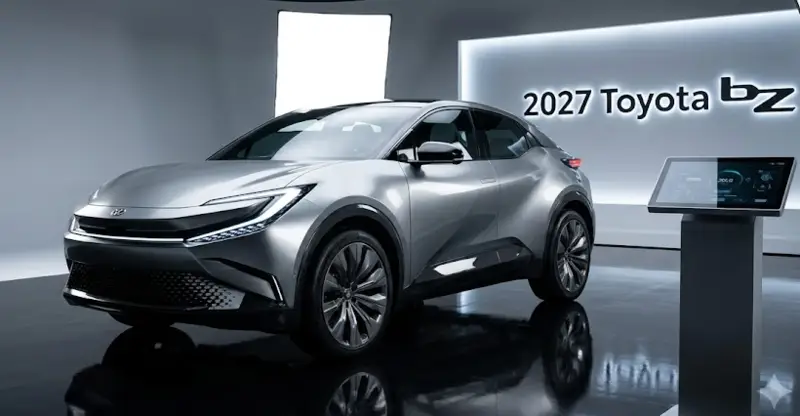
Industry observers expect future bZ models to feature cleaner, more aerodynamic styling than previous Toyota vehicles. The front fascia may become even more minimalist, replacing traditional grille designs with sculpted surfaces that optimize airflow while emphasizing the distinctive identity of battery-electric vehicles.
Slimmer LED headlights could incorporate advanced adaptive lighting technology, while redesigned daytime running lights may establish a recognizable visual signature shared across Toyota’s expanding electric lineup.
From a side view, aerodynamic efficiency is expected to remain a primary design objective. Flush door handles, carefully sculpted body panels, optimized wheel designs, and improved underbody airflow management could help lower energy consumption and reduce wind noise during highway travel.
The roofline may become slightly more streamlined without compromising passenger comfort. Toyota has steadily improved packaging efficiency within its electric platforms, allowing designers greater freedom to maximize interior space despite maintaining attractive exterior proportions.
At the rear, full-width LED lighting signatures and carefully integrated aerodynamic elements could create a sophisticated appearance while enhancing efficiency. Toyota has increasingly embraced clean, modern design language, and future bZ vehicles are expected to continue this trend.
Beyond aesthetics, structural improvements are likely to accompany any redesign. Toyota continues investing in next-generation battery packaging and dedicated EV platforms that improve rigidity, reduce weight, and optimize interior packaging, potentially resulting in better ride quality, enhanced safety, and increased driving range.
2027 Toyota bZ Exterior and Interior
The exterior of a future 2027 Toyota bZ is expected to reflect the company’s vision for modern electric mobility by balancing futuristic styling with everyday practicality.
Rather than relying on dramatic design elements, Toyota will likely emphasize elegant simplicity. Carefully integrated lighting, aerodynamic wheel designs, and sculpted body surfaces could create a premium appearance that remains timeless rather than overly experimental.
Depending on the trim level, premium exterior finishes, contrasting roof colors, panoramic glass roofs, and larger aerodynamic alloy wheels may offer buyers greater personalization options.
The cabin is expected to represent one of the most significant areas of advancement. Electric vehicle platforms naturally create additional interior space by eliminating many components associated with conventional internal combustion engines. Toyota is likely to capitalize on this advantage through a spacious, minimalist interior focused on comfort and technology.

A large centrally mounted infotainment display will probably serve as the primary interface for navigation, entertainment, vehicle settings, and charging management. Toyota’s latest multimedia platform is expected to feature faster processing speeds, improved voice recognition, and continuous over-the-air software updates.
The instrument cluster may become increasingly digital, presenting customizable information such as driving range, battery status, energy consumption, navigation instructions, and advanced driver assistance data.
Material quality is also expected to improve substantially. Sustainable fabrics, recycled materials, premium synthetic leather, and environmentally conscious manufacturing processes may become central themes throughout the cabin. Toyota has repeatedly emphasized sustainability beyond vehicle emissions, making eco-friendly interior materials a logical extension of its corporate strategy.
Passenger comfort should benefit from redesigned seating with enhanced ergonomic support, improved climate management, and additional sound insulation. Electric vehicles naturally produce less drivetrain noise than conventional automobiles, and Toyota is expected to enhance further cabin quietness through acoustic glass and advanced insulation techniques.
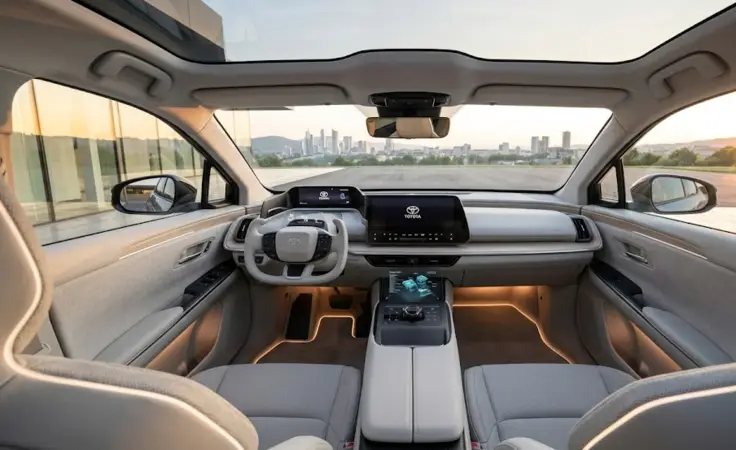
Storage flexibility may also improve thanks to optimized battery packaging and flat floor construction. Larger center consoles, additional charging compartments, wireless device charging, and expanded cargo capacity could make the vehicle even more practical for everyday use.
Safety will undoubtedly remain a cornerstone of Toyota’s engineering philosophy. Although official equipment has not been announced, the latest Toyota Safety Sense technologies are expected to include adaptive cruise control, lane-centering assistance, automatic emergency braking, blind-spot monitoring, rear cross-traffic alert, driver monitoring systems, and advanced parking assistance.
2027 Toyota bZ Engine and Performance
Unlike Toyota’s hybrid vehicles, the future bZ lineup will rely entirely on battery-electric propulsion. However, Toyota has not confirmed technical specifications for a 2027 model.
Industry analysts expect Toyota to introduce significantly improved battery technology by 2027. The company has publicly discussed ongoing development of next-generation lithium-ion batteries with higher energy density, faster charging capability, and lower production costs. If these technologies reach production, they could dramatically improve both driving range and charging performance.
Some observers have also suggested that Toyota’s continued research into solid-state battery technology could influence future bZ vehicles. While Toyota has demonstrated promising progress in this area, the company has not confirmed that solid-state batteries will appear in a production 2027 bZ model. Therefore, any discussion of their availability remains speculative.
Driving range is expected to increase compared with today’s electric vehicles. Depending on battery size and configuration, many analysts believe future Toyota EVs could comfortably exceed in optimal conditions. However, Toyota has released no official figures regarding any future model.
Charging performance is another area where substantial improvements are anticipated. Faster DC charging capability, improved battery thermal management, and more intelligent charging software could significantly reduce charging times during long-distance travel.
Toyota may also continue offering both front-wheel-drive and all-wheel-drive configurations. Dual-motor all-wheel-drive variants would likely provide stronger acceleration, improved traction, and enhanced confidence in adverse weather conditions.
Ride quality is expected to benefit from the inherent advantages of dedicated electric platforms. The battery’s low placement within the chassis lowers the vehicle’s center of gravity, improving stability while enhancing cornering confidence and overall comfort.
Steering refinement, regenerative braking calibration, and intelligent energy management software are also expected to receive ongoing improvements. Multiple driving modes may allow drivers to balance efficiency, comfort, and performance according to varying road conditions and personal preferences.
Although outright acceleration figures often dominate EV discussions, Toyota will likely continue prioritizing balanced performance, predictable handling, long-term reliability, and consistent real-world usability rather than focusing exclusively on maximum power output.
2027 Toyota bZ Price and Release Date
As of now, Toyota has not officially announced a vehicle known specifically as the 2027 Toyota bZ. Consequently, all pricing and release information remains speculative.
Industry analysts expect Toyota’s next-generation battery-electric models to remain competitively positioned within the growing EV marketplace. Depending on battery capacity, drivetrain configuration, and equipment levels, pricing could reasonably range from $42,000 to $48,000 for entry-level variants, while premium dual-motor versions featuring larger battery packs, luxury appointments, and advanced technology could range from $55,000 to $70,000. These figures represent industry estimates rather than official pricing.
Regarding availability, many observers anticipate Toyota will continue expanding its global bZ lineup throughout 2026 and 2027, introducing new electric models across multiple vehicle segments. However, Toyota has not confirmed any production schedule, launch timing, or model lineup corresponding specifically to a 2027 Toyota bZ.
Potential buyers should therefore consider all specifications, pricing, and release expectations presented here as informed projections until Toyota publishes official information.
2027 Toyota bZ Personal Note
Toyota’s transition from hybrid leadership to broader electric vehicle development represents one of the industry’s most closely watched transformations. Rather than abandoning its traditional strengths, the company appears determined to apply decades of engineering expertise, manufacturing quality, and long-term durability to an entirely new generation of battery-electric vehicles.
That measured approach may ultimately become one of Toyota’s greatest advantages. While some manufacturers prioritize rapid expansion, Toyota has consistently focused on refining technology until it meets the reliability standards customers have come to expect from the brand.
If a 2027 Toyota bZ emerges as part of the company’s expanding electric portfolio, it will likely emphasize thoughtful engineering rather than unnecessary complexity. Improved battery technology, greater driving range, faster charging, enhanced digital connectivity, sustainable materials, and Toyota’s renowned build quality could combine to create an electric vehicle that appeals to mainstream buyers as much as early adopters.
Although official confirmation is still pending, expectations for Toyota’s future bZ lineup continue to grow. As battery technology matures and Toyota accelerates its electrification strategy, the next generation of bZ models has the potential to become a defining chapter in the company’s history. For drivers seeking an electric vehicle that balances innovation with dependability, the future Toyota bZ family may ultimately represent one of the most compelling choices in the rapidly evolving EV market.
Also read the article : https://cagecars.com/2027-toyota-aygo-everything-we-expect-from-toyotas/