
The Hyundai Kona is expected to continue Hyundai’s aggressive push into the compact SUV market, blending futuristic styling, efficient powertrains, and advanced technology. Since its introduction, the Kona has become one of Hyundai’s most popular small crossovers because of its youthful design, practical size, and affordable pricing. For 2027, Hyundai is likely preparing significant refinements that could make the Kona even more competitive in the rapidly growing compact SUV category.
As buyers increasingly shift away from traditional sedans toward versatile crossovers, Hyundai appears determined to keep the Kona at the forefront of innovation. The upcoming model is expected to feature updated exterior styling, improved cabin technology, enhanced hybrid and electric options, and better ride comfort. Hyundai is also likely to focus heavily on efficiency and connectivity, making the Kona especially attractive to younger drivers and urban commuters.

The compact crossover segment remains highly competitive, with rivals such as the Toyota Corolla Cross, Honda HR-V, Mazda CX-30, and Kia Seltos continuing to gain popularity worldwide. However, Hyundai’s combination of bold design, advanced technology, and electrified powertrains may help the 2027 Kona stand out from the competition.
The upcoming Kona is also expected to support Hyundai’s broader electrification strategy. Gasoline, hybrid, and fully electric variants will likely remain part of the lineup, allowing buyers to choose the powertrain that best fits their lifestyle and driving needs.
2027 Hyundai Kona Overview
The 2027 Hyundai Kona is expected to offer a balanced combination of practicality, fuel efficiency, modern technology, and stylish design. Hyundai has steadily improved the Kona over recent years, transforming it into a compact SUV that appeals to a broad audience ranging from first-time buyers to environmentally conscious commuters. One of the Kona’s biggest strengths is its versatility. The compact dimensions make it ideal for city driving and parking, while the elevated ride height and flexible cargo area provide SUV-like practicality. Hyundai is expected to further improve passenger comfort and cargo usability in the 2027 model.
Technology will remain one of Kona’s most important selling points. Buyers are likely to see larger infotainment displays, wireless smartphone integration, advanced navigation systems, and expanded driver-assistance features. Hyundai may also improve cloud-based connectivity and over-the-air software updates. Fuel efficiency is expected to remain a major advantage, especially for hybrid and electric variants. Hyundai has been aggressively expanding its electrified vehicle lineup, and the Kona is likely to become an even more important part of that strategy.
Ride quality may also improve significantly. Hyundai engineers are expected to focus on creating a smoother, quieter driving experience while maintaining responsive handling in urban environments. Despite these strengths, the Kona may still face some criticism. Some buyers may find rear-seat space slightly limited compared to larger SUVs, while others may dislike the growing use of touchscreen controls. Higher trims equipped with premium technology may also cost more.
Positive Reviews Expected for the 2027 Kona
The upcoming Kona is expected to receive praise for several reasons :
- Futuristic and stylish exterior design
- Excellent fuel efficiency in hybrid and EV models
- Compact size ideal for urban driving
- Advanced infotainment and safety features
- Competitive pricing and warranty coverage
- Comfortable ride quality
- Flexible powertrain options, including electric variants
Automotive experts are likely to consider the Kona one of the strongest value-oriented compact crossovers on the market.
Negative Reviews Expected for the 2027 Kona
Potential drawbacks may include :
- Rear-seat space may feel tight for taller passengers
- Cargo capacity may trail larger competitors
- Touch-sensitive controls could frustrate some users
- Premium trims may become expensive
- The base engine may feel underpowered for highway driving
Even with these concerns, the Kona is expected to remain highly appealing because of its overall practicality, efficiency, and modern design.
2027 Hyundai Kona Redesign
The redesign of the 2027 Hyundai Kona is expected to emphasize further futuristic styling, aerodynamic efficiency, and advanced digital technology. Hyundai’s recent design language has become increasingly bold, and the Kona will likely continue evolving in that direction.
2027 Hyundai Kona Exterior Redesign
The exterior design of the 2027 Kona is expected to feature sharper lines, cleaner surfaces, and more aerodynamic proportions. Hyundai may redesign the front fascia with slimmer LED lighting elements, a wider grille design for gasoline models, and a cleaner, closed-off appearance for electric variants. The front end could include a full-width LED daytime running light bar stretching across the hood line, creating a highly futuristic visual signature. Hyundai may also refine the bumper and lower air intake areas to improve airflow and efficiency.
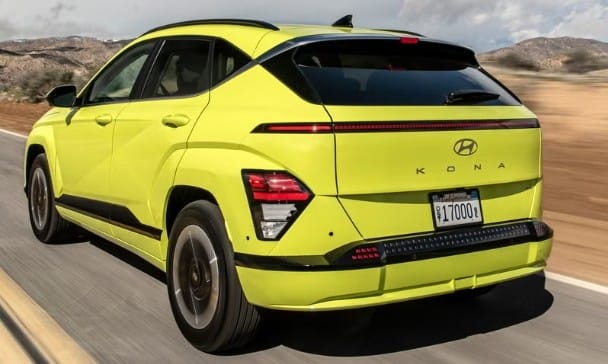
Along the sides, the Kona is expected to feature redesigned alloy wheels ranging from 17 to 20 inches in diameter, depending on trim level. Sharper body sculpting and contrasting wheel-arch cladding may continue to emphasize the SUV’s adventurous personality.
At the rear, the Kona could receive redesigned LED taillights connected by a horizontal light bar. A more aerodynamic rear spoiler and cleaner bumper design may contribute to improved efficiency and a more upscale appearance. Electric variants are likely to receive unique styling cues, including aerodynamic wheels, closed front grilles, and exclusive lighting signatures.
Exterior Pros
The redesigned exterior is expected to provide several advantages :
- Bold and futuristic styling
- Improved aerodynamic efficiency
- Advanced LED lighting technology
- Strong visual presence despite compact size
- Distinctive appearance compared to rivals
The Kona’s unique design language may attract younger buyers and technology-focused consumers.
Exterior Cons
Potential disadvantages may include :
- Bold styling may not appeal to conservative buyers
- Large wheels could slightly affect ride comfort
- Exterior lighting repairs may become costly
- Compact proportions may reduce rear visibility slightly
Even so, Hyundai’s design strategy is expected to make the Kona one of the most visually distinctive compact SUVs on the market.
2027 Hyundai Kona Interior Redesign
The interior of the 2027 Hyundai Kona is expected to become more sophisticated and technology-focused while improving practicality and comfort. Hyundai has steadily enhanced cabin quality across its lineup, and the Kona will likely benefit from those advancements. The dashboard may feature dual panoramic displays that integrate the digital instrument cluster and infotainment touchscreen into a single seamless panel. Hyundai could also redesign the center console to create additional storage space and improve ergonomics.
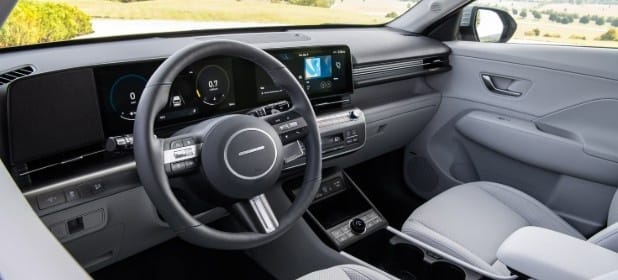
Premium trims may include leather upholstery, ambient lighting, heated and ventilated seats, and premium audio systems. Hyundai is also expected to improve cabin insulation to reduce road and wind noise during highway driving. Passenger comfort will likely improve despite the Kona’s compact dimensions. Redesigned front seats may offer better support, while rear passengers could benefit from slightly increased legroom and improved seat cushioning. Technology upgrades are expected to include wireless Apple CarPlay and Android Auto, over-the-air software updates, cloud-based navigation systems, and advanced voice-recognition software.
Interior Pros
Expected strengths of the redesigned interior include :
- High-tech dashboard layout
- Improved material quality
- Better connectivity features
- Enhanced storage solutions
- Comfortable front seating
- Cleaner and more modern cabin design
The Kona may become one of the most technologically advanced compact SUVs.
Interior Cons
Potential disadvantages may include :
- Rear seating space may remain limited
- Touch-sensitive controls could distract drivers
- Glossy interior surfaces may attract fingerprints
- Higher trims could become expensive
Despite these concerns, the overall cabin experience is expected to improve significantly.
2027 Hyundai Kona Engine and Performance Details
The 2027 Hyundai Kona is expected to offer multiple powertrain options designed to satisfy a broad range of buyers. Hyundai will likely continue offering gasoline, hybrid, and electric variants, allowing customers to choose between affordability, efficiency, and performance. The standard gasoline engine may remain a naturally aspirated 2.0-liter four-cylinder producing approximately 150 horsepower. This engine is expected to prioritize fuel efficiency and smooth daily driving rather than aggressive performance. Hyundai engineers may refine the engine for quieter operation and improved throttle response.
A turbocharged engine could remain available on sport-oriented trims. This powertrain may produce around 190 horsepower while delivering stronger acceleration and more engaging driving dynamics. Hyundai may pair the turbocharged engine with an eight-speed automatic transmission for smoother and quicker gear changes. Hybrid technology is expected to become increasingly important for the Kona lineup. The hybrid variant may combine a gasoline engine with an electric motor system, producing around 180 horsepower combined. This setup should improve low-speed acceleration while delivering excellent fuel economy.
The fully electric Hyundai Kona Electric is expected to remain one of the lineup’s highlights. Hyundai may improve battery capacity and charging speeds, potentially increasing driving range beyond 300 miles on a single charge. Fast-charging capability could also improve significantly, reducing charging times for long-distance travel. Transmission options will likely vary depending on the powertrain. Gasoline models may use continuously variable or automatic transmissions, while electric variants will continue using single-speed electric drive systems.
Ride quality is expected to improve thanks to suspension refinements and updated chassis tuning. Hyundai appears focused on making the Kona more comfortable for daily commuting while preserving its responsive urban handling. All-wheel drive is expected to remain available on selected gasoline- and hybrid-trims. Hyundai’s HTRAC all-wheel-drive system should provide improved traction in poor weather conditions while maintaining stable handling.
Fuel economy estimates are expected to remain highly competitive. Gasoline models may achieve around 35 mpg combined, while hybrid variants could potentially exceed 45 mpg combined. Electric versions may deliver some of the best efficiency figures in the compact EV segment. Safety systems are expected to become even more advanced. Adaptive cruise control, lane-centering assist, blind-spot monitoring, collision-avoidance systems, and semi-autonomous highway-driving features may become standard across more trims. The Kona’s performance philosophy appears centered on efficiency, technology, and everyday usability rather than aggressive sportiness. For most urban drivers and commuters, this balance is likely to be highly appealing.
2027 Hyundai Kona Release Date
Although the Hyundai Official Website has not officially announced all details about the 2027 Kona, industry analysts expect the compact SUV to debut sometime in late 2026, arriving at dealerships in early 2027. Prototype testing may begin appearing publicly during 2026 in South Korea, Europe, and North America. Hyundai could unveil the updated Kona at a major international auto show before production officially begins.
Gasoline-powered trims are expected to launch first, followed later by hybrid and fully electric variants. Battery supply and production scheduling may affect the availability of electrified models. The Kona is expected to remain an important global model for Hyundai, with availability across North America, Europe, Asia, and Australia.
2027 Hyundai Kona Expected Price
Pricing for the 2027 Hyundai Kona is expected to increase slightly because of upgraded technology, improved materials, and expanded electrification options. However, Hyundai will likely continue positioning the Kona as an affordable compact SUV with strong value.
Estimated pricing may include :
- Base gasoline trim: around $27,000
- Mid-level trims: approximately $30,000 to $35,000
- Hybrid variants: starting near $34,000
- Electric models: potentially beginning around $40,000
- Fully loaded premium trims: approaching $48,000
Despite these increases, the Kona is still expected to deliver excellent value because of its advanced technology, fuel efficiency, and extensive warranty coverage. Hyundai’s generous warranty program will likely remain one of the Kona’s strongest advantages. Buyers are expected to receive extensive powertrain and battery warranty protection, helping reduce long-term ownership concerns.
2027 Hyundai Kona Final Thoughts
The 2027 Hyundai Kona appears ready to strengthen its position as one of the most advanced and versatile compact SUVs in the automotive market. With its futuristic redesign, expanded hybrid and electric options, upgraded interior technology, and improved efficiency, the upcoming Kona could appeal to a wide range of buyers. Its combination of practicality, affordability, and modern features is expected to make it especially attractive to urban drivers, younger consumers, and environmentally conscious commuters. While some buyers may prefer larger SUVs or more traditional styling, the Kona’s overall package appears highly competitive. As Hyundai continues expanding its electrification strategy and premium-oriented design philosophy, the 2027 Kona could emerge as one of the standout compact crossovers of the decade.
Also read the article : https://cagecars.com/2026/05/25/2027-hyundai-elantra-interior-technology/